
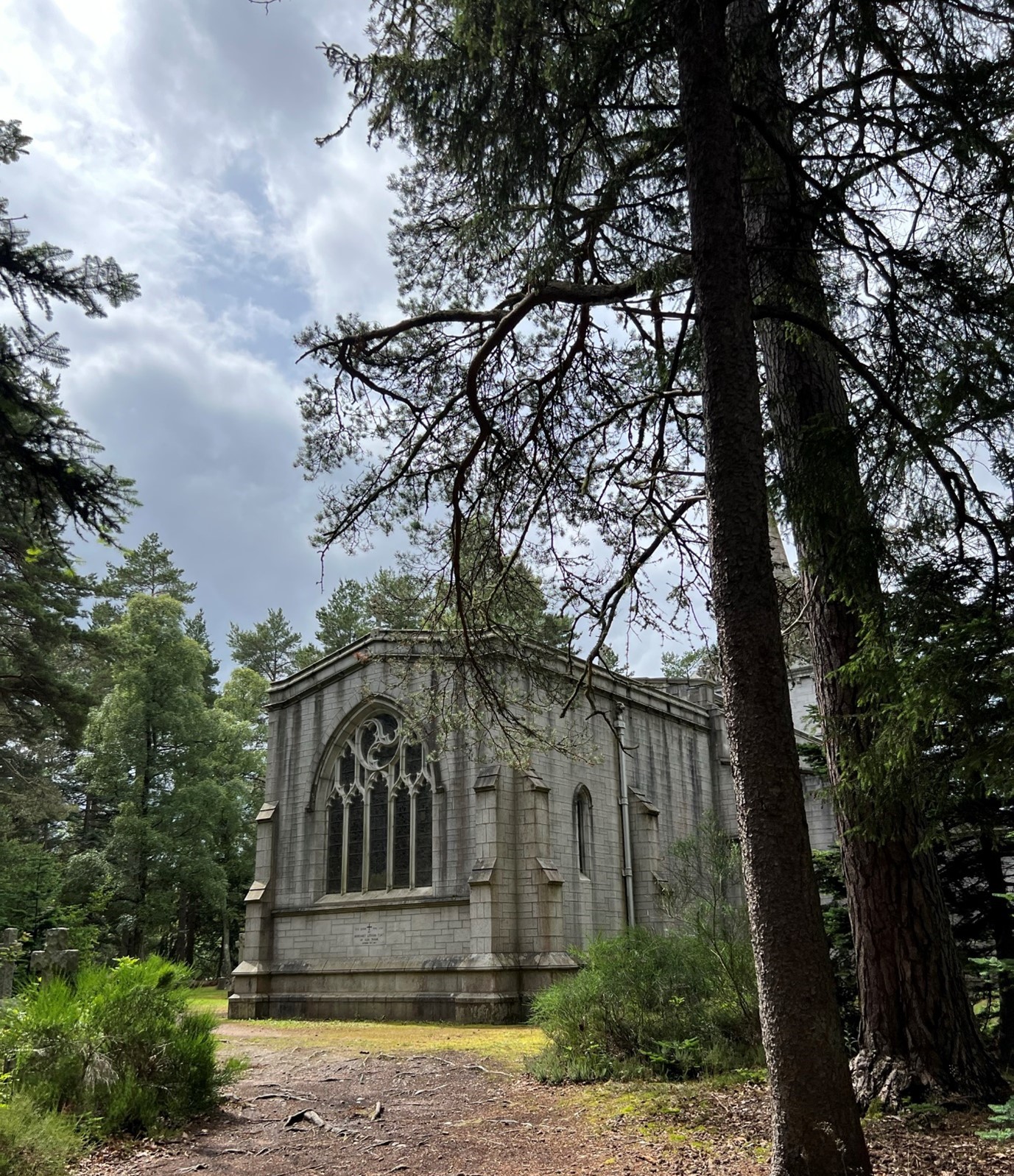
St Kentigern’s and St Thomas’ are village churches in the communities of Ballater and Aboyne, respectively. These two charges are working to embrace their environment and engage their communities in building a movement towards a more sustainable future.
St Kentigern’s is a well-loved church in the heart of Ballater. In 2018 they redid their heating system, installing under-pew heaters which are electric and able to be individually controlled. This allows each pew to be controlled by those sitting there to regulate their own heating, and only heats those pews in use – embracing the idea of ‘heating the people not the space’. The pews are efficient and warm up quickly. The heated pews are complemented by an air curtain, which allows the air to be heated as congregants enter the building. The new heating system replaced a heating arrangement involving pipework, which needed to be turned on the night before a service. Since this project was completed, both costs and energy use are a third of what they were just over five years ago. The church also plans to switch to a green tariff when possible, in the new year.
Due to the nature of the church building, insulation is not an option. Other accommodations have been made in order to retain heat as much as possible; such as thick carpets being laid on the altar to insulate the stone and reduce the impact of drafts. Secondary glazing for the stained glass windows and limited insulation in the adjoining hall are currently also being considered to further develop the building’s energy efficiency.


St Kentigern’s is also placing high value on biodiversity; with areas of their grounds designated as low-mow areas and others being used to foster local and edible plants suitable for foraging. Fruit trees have been planted in addition to a small garden located near to a dedicated quiet space.
St Thomas’ is a unique church located on acres of quiet wooded land in the centre of Aboyne. They have a similar heating system to St Kentigern’s complemented by radiant heat chandeliers and bar heaters. In installing these heat chandeliers, they simultaneously upgraded their lighting system to be more efficient and cost-effective. This mixed system is effective and cost efficient; since their installation in 2017, costs and energy use are a third of what they were previously. Due to the nature of the building and location of the church, heat pumps and solar panels are neither possible nor appropriate and thus the current system is the most efficient manner of heating possible. This will be furthered by also switching to a green tariff in the new year.


Thick carpets are used, similar to those at St Kentigern’s, to insulate the floors and prevent drafts flowing in from stained glass windows throughout the church. Similarly, carpets have been used to cover the heating grates from the original coal system and a thick curtain protects from drafts entering through the main door.
The grounds of St Thomas are breath-taking – acres of trees and woodland are tended to for the benefit of the church, community and environment. Hundreds of trees make up a lush oasis of forest with quiet spaces, Christmas trees and a composting outhouse toilet housed in a listed building (which once was the coal boiler!) The community makes use of the land regularly; with after school clubs constructing bug hotels and hedgehog houses, the Aboyne Gardens Group regularly tends the land, the local Men’s Shed building planters for flowers and local schools looking to hold ‘Forest School’. Rector Rev Canon Vittoria Hancock says that St Thomas’ is keen to partner with any community organisation in developing projects that appreciate the land and further sustainable initiatives.


Both charges refrain from using single use products, and instead have been using proper crockery and recyclable goods over the past few years. Both charges also have recycling systems and are conscious of using Fairtrade products. St Kentigern’s and St Thomas’ have both achieved bronze awards from Eco-Congregation Scotland and are currently working towards accreditation for their silver awards. There has been the conscious cultivation of a culture of conservation – with attention devoted to performing whatever physical improvements possible, supporting their environment and building a culture of sustainability and environmental priority. Rev Hancock, who is rector for both St Thomas’ and St Kentigern’s, recommends charges start with the small things – working within the moment, the community and the local environment they have.
Jack Nevin, Innovation Coordinator


