
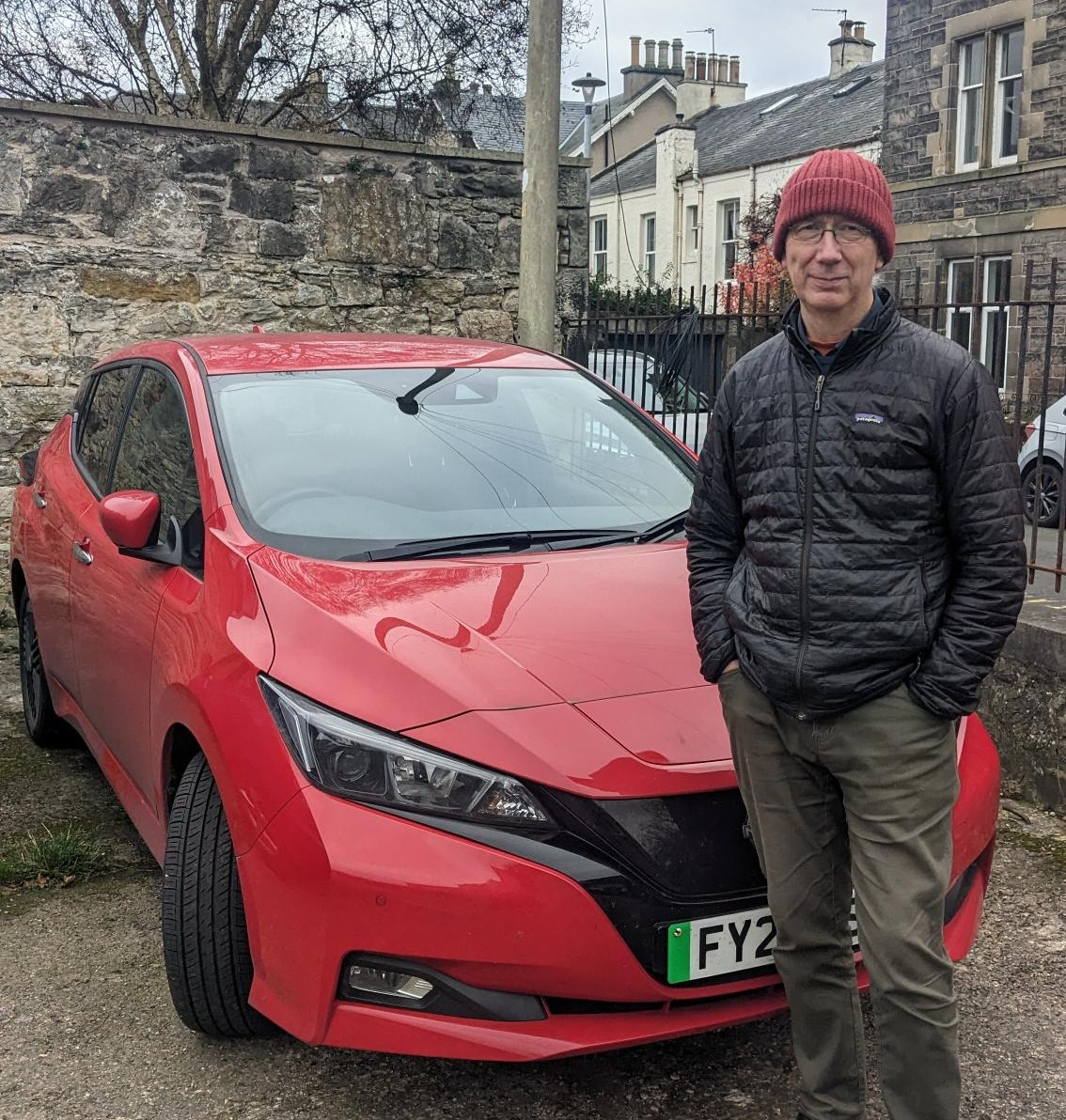
For the past two years Daniel Prince has worked as the Clean Energy Advisor to the Scottish Episcopal Church. Daniel reflects below on his role and time as part of the Net Zero Team.
Churches sit at the intersection of people, buildings, money, faith, and tradition. Decarbonising them is never just a technical problem, and that is what has made my work both difficult and satisfying.
I’ve learned that most obstacles are not about heat pumps or insulation. They are about confidence. Some churches struggle to believe that Net Zero is realistic for them. The buildings are old, budgets are tight, and volunteers are already stretched. Net Zero can feel like something designed for other organisations with more money and fewer constraints.
A large part of my job has been helping people move past that initial scepticism and see that progress is possible, even if it happens slowly and imperfectly. Listening has been central to that process. I spent plenty of time hearing about concerns, frustrations, and past experiences.


Once people feel heard, the conversation often shifts. The question becomes not “can we do this?” but “what would a first step look like?”. One of the most useful things I have been able to say is that you do not need a full plan from day one.
Understanding energy use, improving basic controls, fixing what is broken, and learning as you go all count as progress. Net Zero is a direction of travel, not a single event.
Faith has often been an important driver in these discussions. For many congregations, caring for creation is central to their mission. Linking carbon reduction to stewardship gives the work meaning beyond compliance or targets. Net Zero becomes less like an external demand and more like an expression of shared values.
My work has also been shaped by geography. Through my links with the Diocese of Moray, Ross and Caithness, I have learnt how different the challenges can be across Scotland. Distance matters. Weather matters. Access to contractors matters.
What feels straightforward in central Scotland can feel much harder further north. Effective support recognises those realities rather than assumes a one size fits all approach.


Progress across the Church has been uneven, but it has been real. More churches are paying attention to how they use energy. More people are asking better questions. Net Zero is increasingly part of normal conversation rather than a specialist topic. That change in tone matters. It is a necessary foundation for long term action.
None of this happens without people. The commitment of clergy, vestry members, volunteers, and staff is what ultimately makes progress possible. I have been struck by how many people, even when uncertain or cautious, are willing to engage honestly and thoughtfully.


I am particularly grateful to the Scottish Episcopal Church’s leadership and my colleagues in the Net Zero Team. Their collective willingness to treat Net Zero as a shared responsibility has been critical. That support has helped create trust and momentum at local level.
This role has reinforced for me that reaching Net Zero is as much about culture and confidence as it is about technology. The challenges remain significant, but the direction is now clearer. Best of all, change is underway.
The Net Zero Team would like to thank Daniel for his wisdom, expertise and dedication to our work over the past two years – he will be greatly missed by staff, clergy and congregations across Scotland.
Bethany Nelson and Daniel Prince


